OBD Scan stands for On-Board Diagnostic Scan. It was originally used to track automatic car emission. Essentially, you can plug in handheld OBD automotive scanners in cars located along or under the dash using an OBD cable for full engine diagnostics. All gasoline-powered cars in the United States built since 1996 are equipped with a plug-in that allows anything related to the engine or engine troubleshooting to be scanned with an OBD II code reader. Most pre-1996 vehicles use the older version known as OBD 1. The difference between the two is that in the case of OBD 1, there is no uniform system to identify the problems associated with engine failure as each manufacturer Auto used its own codes and definition.
The development of the OBD II scanner has simplified the problem of identifying engine failure for multiple brands of cars by standardizing the on-board diagnostic system on all cars manufactured since 1996.
Once the portable OBDII scanner is connected, live data related to your car's engine will appear on the scanner's LCD screen. It can also be used to check the engine light and provide information on the car's fuel injection efficiency and throttle related issues. Most importantly, you can check the emission status of your engine if it meets the state-required smog emission.
If there is an engine failure, such as anything related to the oxygen sensor, the temperature sensor, the throttle sensor, the temperature sensor, it will show up and log on the screen under DTC or Diagnostic Trouble Code. This is just an indicator that warns of engine failure. However, don't buy replacement parts just yet because such warning could be due to a faulty sensor or a blockage causing abnormal high or low reading. Whether it is a bad indicator or not, it is a good start to discover any real problems with your engine. Then you need to do some additional research on the specific area around the indicated problem before you go out and buy replacement parts.
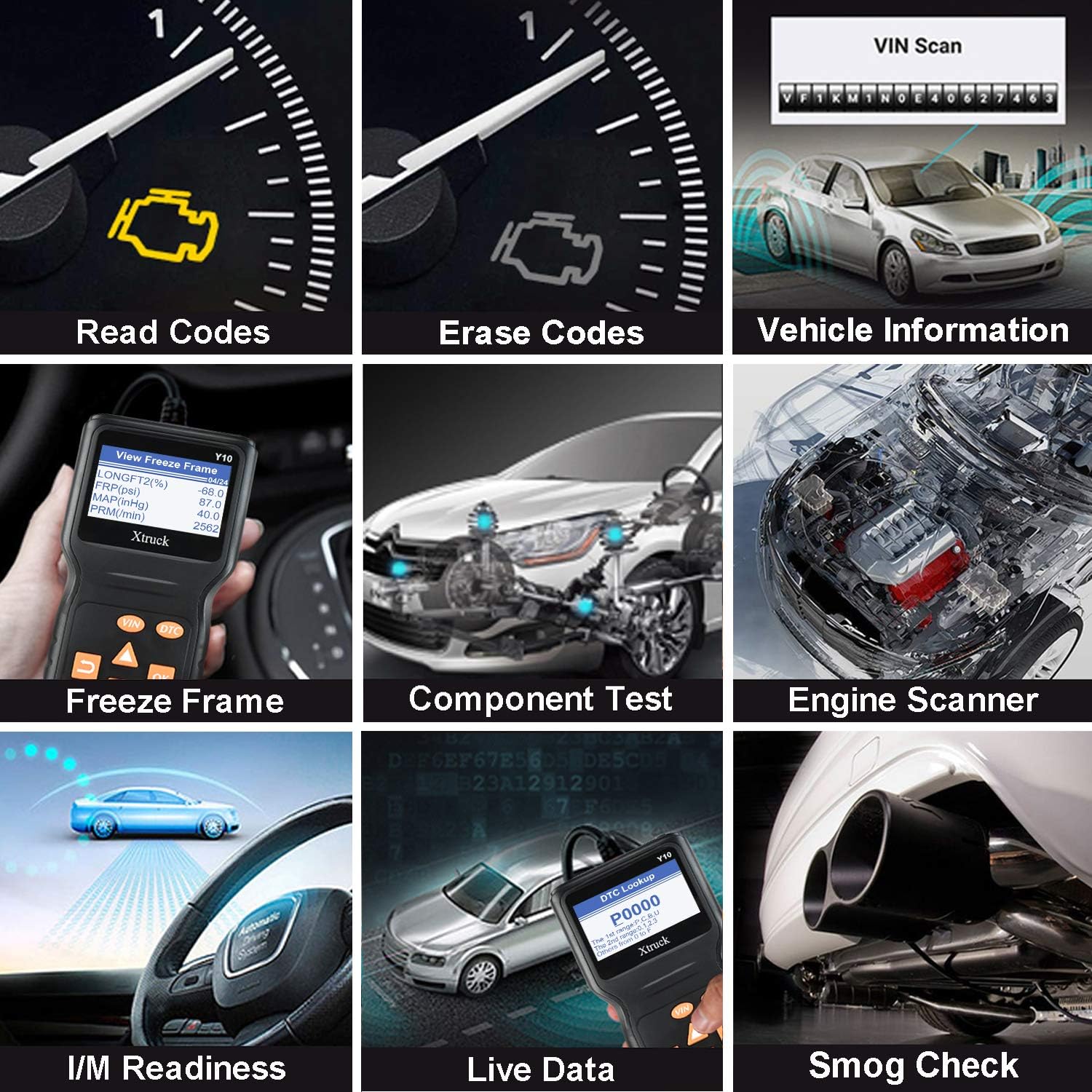
Basically, there are currently two types of automotive OBD scanners on the market. A handheld scanner that incorporates OBD 1 and OBD II code reader are much more expensive. There is also a pre-1996 OBDII scanner that has a different plug requirement. For older models between 1991 and 1995, like GM, Ford, or Chrysler, they have a different connector to plug in OBD scanning devices. As for brands, there are plenty of options to choose from, from the most popular brands like Equus OBD, Actron scanners, Autoxray scanner and OTC Genisys, to name a few.

No comments:
Post a Comment